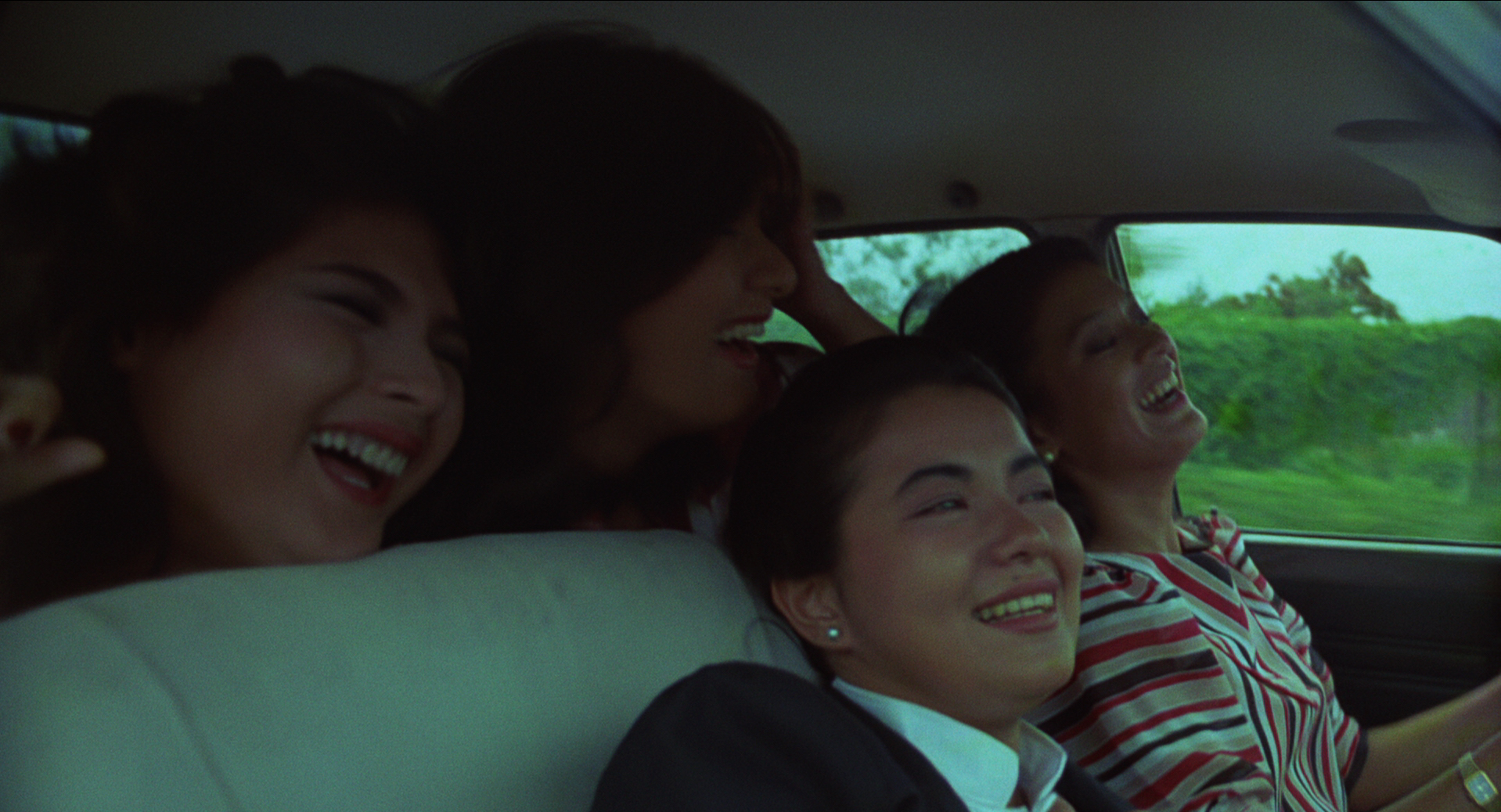
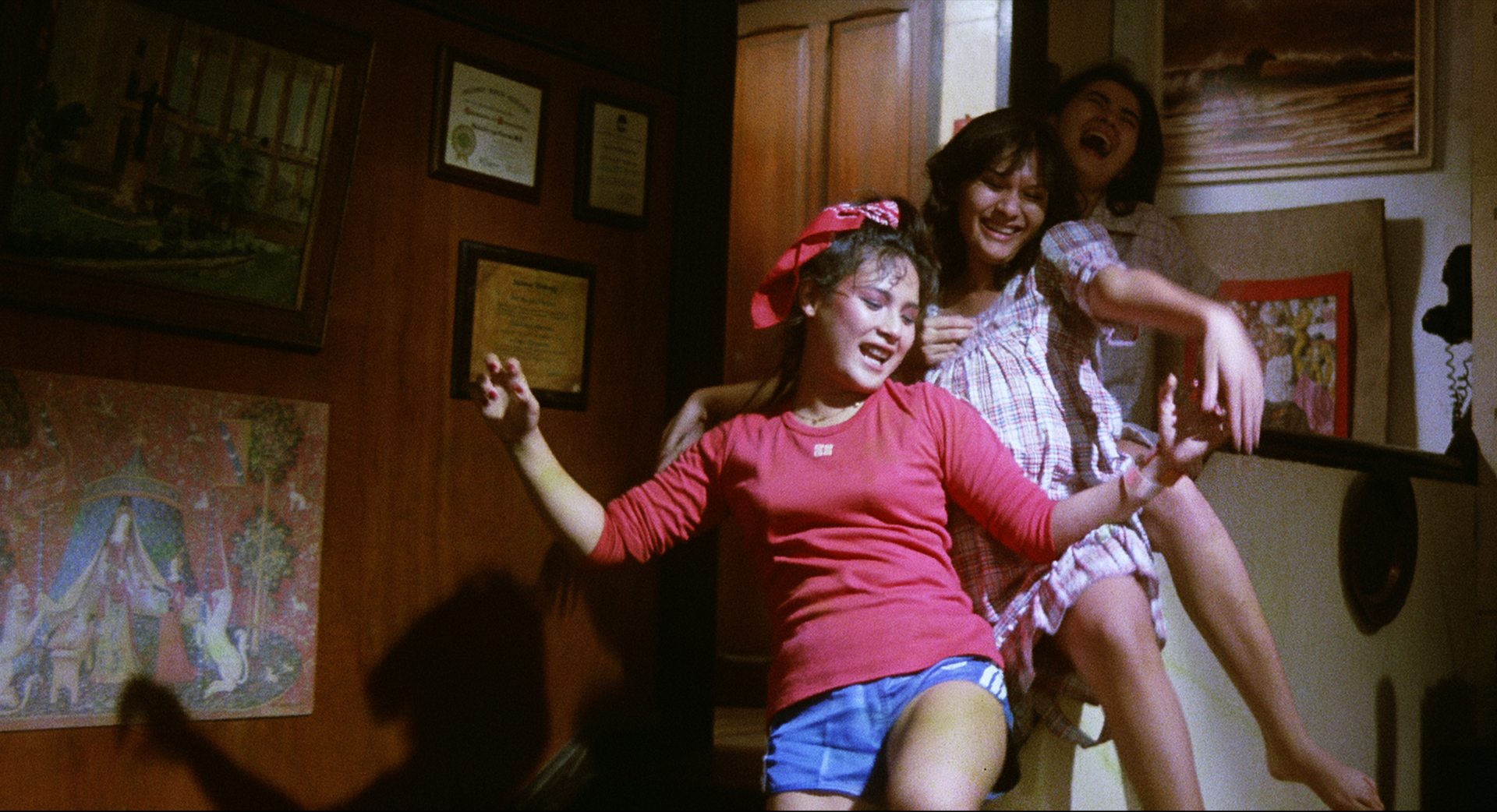
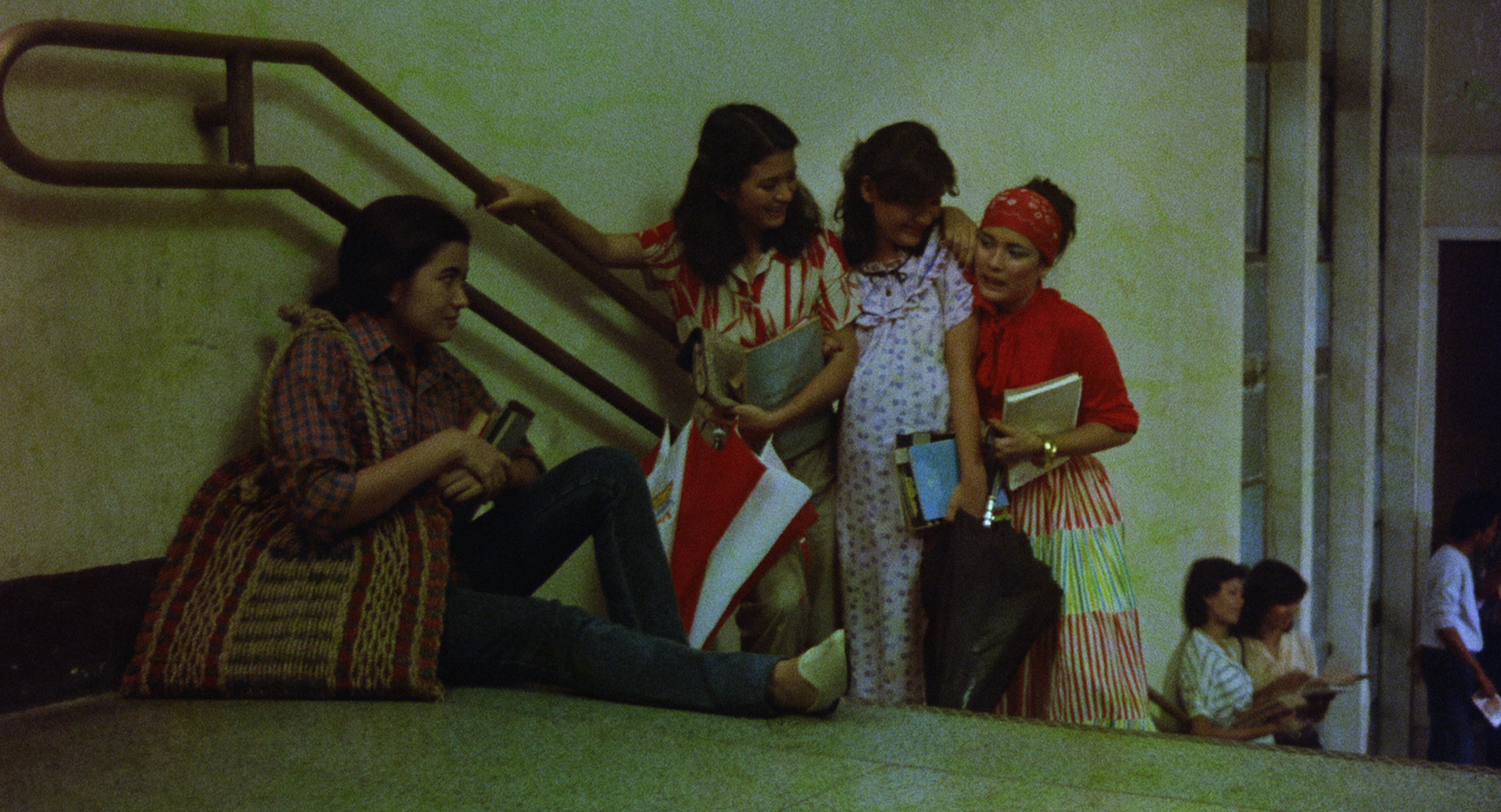
PHL 1982 | Director: Marilou Diaz-Abaya | Screenplay: Ricardo Lee | Camera: Manolo Abaya | Editing: Manolo Abaya, Marc Tarnate | Sound: Amang Sanchez | Music: George Canseco | Cast: Lorna Tolentino, Gina Alajar, Sandy Andolong, Anna Marin, Ronald Bregendahl, Juan Rodrigo, Michael Sandico, Laurice Guillen, Mia Gutierrez, Lito Pimentel, Odette Khan, Dexter Doria, Manny Luna | Production: Jesse Ejercito, Seven Stars Production | Colour | DCP | 138 Min. | filipino, english OV with english SUB | ABS-CBN
Diaz-Abaya's coming-of-age film – the screenplay was written by Ricky Lee, with whom she often collaborated – tells the story of four college friends across years and time jumps: singer Kathy has a lot of ambition but little singing talent; Joey drifts between drugs, men, and the student activist she loves. Maritess wants to be a writer, but lives in a violent marriage. Sylvia cannot let go of her ex-husband, who in turn loves a male dancer. The colegialas are growing up during the dictatorship of Ferdinand Marcos. The film was made one year after martial law was officially lifted in the Philippines. The film's underlying theme is that private and political matters are closely intertwined, as are moral concepts and gender roles. Against the “morality” of repressive (gender) ideologies and notions of guilt, shame, and female self-sacrifice, Dias-Abaya uses her characters to present a different kind of “morality”. Friendship and solidarity offer a glimpse of a life beyond patriarchal control and stigma. Or, specifically: autonomous professional development, escape from marriage, polyamorous queer relationships, emotional healing. (Gaby Babić)
| Acronyms | |
|---|---|
| amer. | American English |
| b/w | Black and white |
| OV | Original version |
| SUB | Subtitles |
| +SUB | electronic live subtitling (below the image) |
| INT | Intertitles |
| Countries | |
|---|---|
| AT | Austria |
| FRG | Federal Republic of Germany (historic) |
| BLR | Belarus |
| DE | Germany |
| CAN | Canada |
| GDR | German Democratic Republic (historic) |
| EGY | Egypt |
| FR | France |
| GB | Great Britain |
| URY | Uruguay |
| BRA | Brasil |
| SWE | Sweden |
| UKR | Ukraine |
| PL | Poland |
| IDN | Indonesia |
| PRT | Portugal |
| HRV | Croatia |
| ECU | Ecuador |
| HUN | Hungary |
| AUS | Australia |
| IT | Italy |
| MEX | Mexico |
| IND | India |
Introduction by Jasmine Grace Wenzel, author, researcher and community organizer
Jasmine Grace Wenzel is a writer, editor and organizer based in Berlin. Their practice moves between political education, cultural programming and creating collective learning spaces using a community-based approach. Their research focuses on questions of political aesthetics, abolition in the context of the “war on drugs” in the Philippines, and emerges from diasporic, self-organized and digital learning spaces: e.g. "Mending the Tear" with Queer Analogue Darkroom at Savvy Contemporary, Berlin (2024), Mapping Philippine Material Culture, Berlin/London (2021). As co-lead, they were responsible for the mediation and education work at the 13th Berlin Biennale for Contemporary Art (2025). Their main project lead was dedicated to two People’s Tribunals, community-based legal forums, on the Systematic Targeting of Women Activists in Sudan and on Art Resisting Oppression—Philippine Cases. As a member of several diasporic Filipinx and anti-colonial collectives, such as GABRIELA Germany, and as co-founder of ALPAS Pilipinas (2021), they are involved in communities and social movements as a cultural worker. They are currently working on a collection of poems and short stories, using magical realism as a thread between intergenerational gaps and feudal feelings.